Frozen vs Fresh Fruit in Smoothies: Which Is Actually Healthier?
Walk down the produce aisle and the assumption is automatic: fresh is best, frozen is the fallback. But when it comes to real fruit smoothies, that conventional wisdom doesn't quite hold up. In fact, in a blended drink, frozen fruit often has the edge — nutritionally, texturally, and even in flavor. As a smoothie shop that has spent over two decades testing every possible combination of fresh, frozen, and in-between ingredients, we want to settle the debate once and for all.
This isn't a takedown of fresh produce. A perfectly ripe South Dakota strawberry in June is a magical thing. But once you understand how fruit ripens, how nutrients change after harvest, and what actually happens to a berry inside a high-powered blender, you'll never look at the freezer aisle the same way again.
How Fresh Fruit Loses Nutrients Faster Than You Think
Most fresh fruit in American grocery stores was picked days — or sometimes weeks — before it landed in your cart. Strawberries are typically harvested 5 to 7 days before they reach the shelf. Tropical fruits like mangoes and pineapples can travel for two weeks. To survive that journey, growers pick produce before peak ripeness, when the sugars and water-soluble vitamins are still developing.
Vitamin C, folate, and many B vitamins are sensitive to oxygen, light, and heat. From the moment a piece of fruit is picked, those nutrients start to degrade. A 2017 study in the Journal of Food Composition and Analysis found that fresh strawberries can lose more than half of their vitamin C within seven days of refrigerated storage. A blueberry's antioxidant capacity drops measurably each day it sits in the bin.
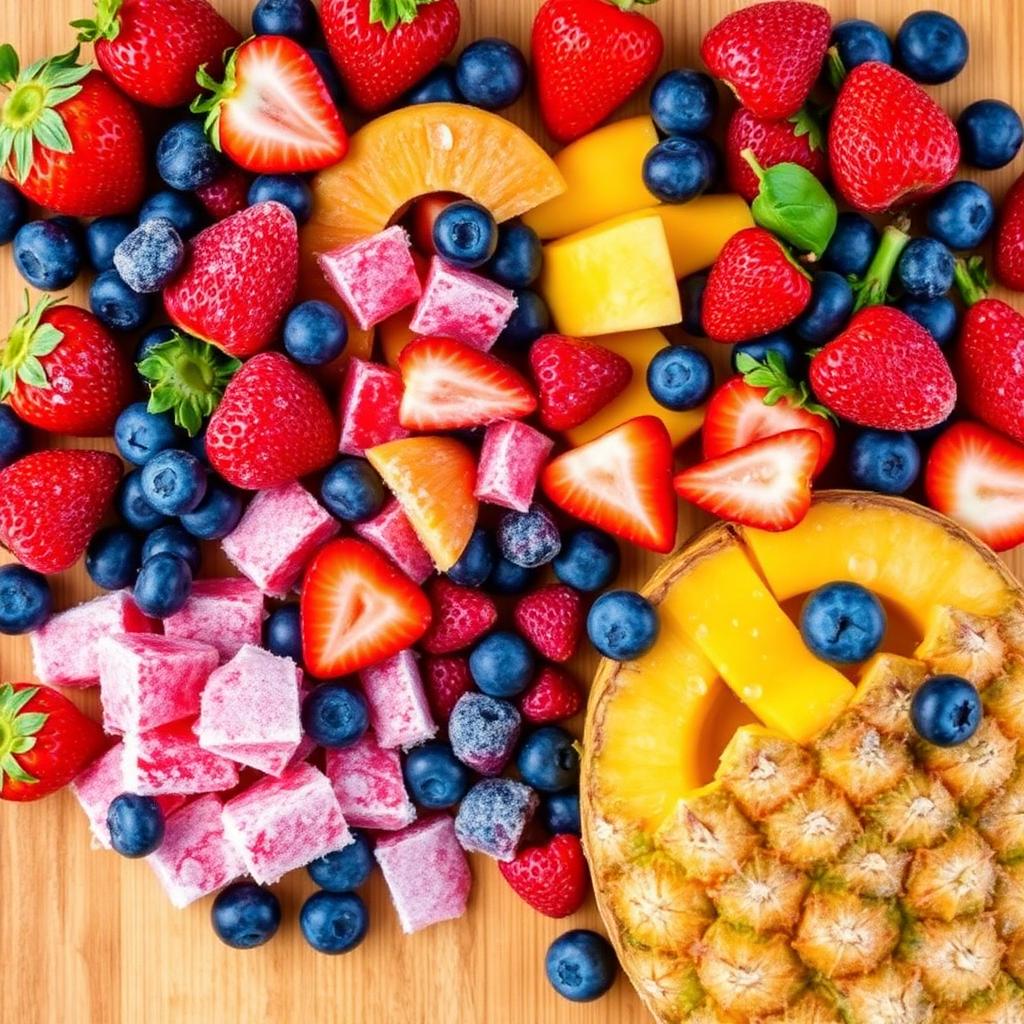
Frozen fruit, by contrast, is typically picked at the peak of ripeness, washed, and flash-frozen within hours. The freezing process essentially pauses nutrient degradation. When you blend a frozen strawberry six months after harvest, its vitamin C content is often higher than the supposedly 'fresh' berry sitting in your fridge.
What Flash-Freezing Actually Does to Fruit
Industrial flash-freezing, also called individual quick freezing (IQF), drops the temperature of a piece of fruit to around -40°F in a matter of minutes. The fast freeze means the water inside the fruit forms tiny ice crystals instead of big jagged ones. That matters because big ice crystals rupture cell walls and turn fruit to mush on thaw. Small crystals leave the cell structure mostly intact.
This is why a properly frozen strawberry, blended into a smoothie, doesn't taste 'old' or watered down. The fruit's natural sugars, fiber, and color compounds are locked in at peak. When you crack open a bag of IQF mango from a reputable supplier, you're often eating a more nutritionally complete fruit than the wax-coated import sitting in your produce drawer.
The Smoothie Texture Question
Beyond nutrition, frozen fruit solves a real problem: smoothie texture. A great smoothie should be cold, thick, and creamy — almost like soft-serve. That texture comes from frozen ingredients. If you blend fresh fruit with juice, you get a sweet drink, but it's thin, room-temperature, and disappointing. To get a milkshake-thick smoothie from fresh fruit, you have to dump in a small mountain of ice cubes — and ice dilutes flavor.
Frozen fruit gives you texture and flavor in one move. Every gram of frozen strawberry is contributing both chill and taste. This is why almost every legitimate smoothie shop in the country — including ours — runs primarily on frozen fruit. It's not a shortcut. It's the right tool.
When Fresh Fruit Wins
There are still places where fresh fruit is the right call. Bananas are the classic example: they're picked green, ripen at room temperature, and are best used fresh (frozen banana is a great addition, but a fresh ripe banana blends in beautifully and adds creaminess). Apples, citrus, and avocado also tend to perform better fresh.
We use fresh bananas in our smoothies for exactly this reason — they bring sweetness and that soft, custard-like body that frozen banana sometimes loses. The best smoothies blend the two worlds: frozen for the fruits that travel poorly, fresh for the ones that hold up.
How Juice Stop Sources Both
Our sourcing philosophy is simple: pick the format that delivers the best version of each ingredient. Strawberries, blueberries, raspberries, mango, pineapple, peach, and dragon fruit come in IQF from suppliers we've vetted for quality. Bananas come in fresh, several deliveries a week. Greens like spinach and kale are always fresh. Açaí arrives as a frozen puree because that's how it actually grows and ships — fresh açaí outside of Brazil is a marketing fiction.
Every Juice Stop smoothie is built around that mix. When you order a Hugs n Kisses, you're getting flash-frozen strawberries and blueberries that were picked at peak ripeness, blended with fresh banana for body, and finished with apple juice for sweetness. The result is colder, thicker, and more nutritious than anything you could make from a clamshell of grocery store berries in February.
What This Means for Your Home Smoothies
If you're making smoothies at home, here's the cheat sheet:
Buy frozen for berries, mango, pineapple, peach, and cherries. Look for bags with just fruit on the ingredient list — no syrup, no added sugar. Store them sealed in the back of the freezer for up to a year. Use fresh for banana, apple, citrus, leafy greens, ginger, and avocado. Add a splash of liquid (juice, milk, or water) and start your blender on low to let the frozen fruit break down before ramping up.
If your home smoothies have been disappointing, frozen fruit is usually the missing piece. Skip the ice. Use real fruit, frozen well, and you'll be making smoothies that rival anything in the cup.
The Bottom Line
Frozen fruit isn't a downgrade. For most of the fruit in your smoothie, it's the better choice — better nutrition, better texture, better flavor. That's not a marketing line. That's twenty-plus years of running a smoothie shop and watching what actually wins, sip after sip.
Next time you stop in, take a peek behind the counter. The bags going into your blender came off a freezer truck this week, picked at peak ripeness somewhere it was actually in season. That's how a real-fruit smoothie is supposed to taste.