Smoothies vs Juices: Which One Is Actually Better for You?
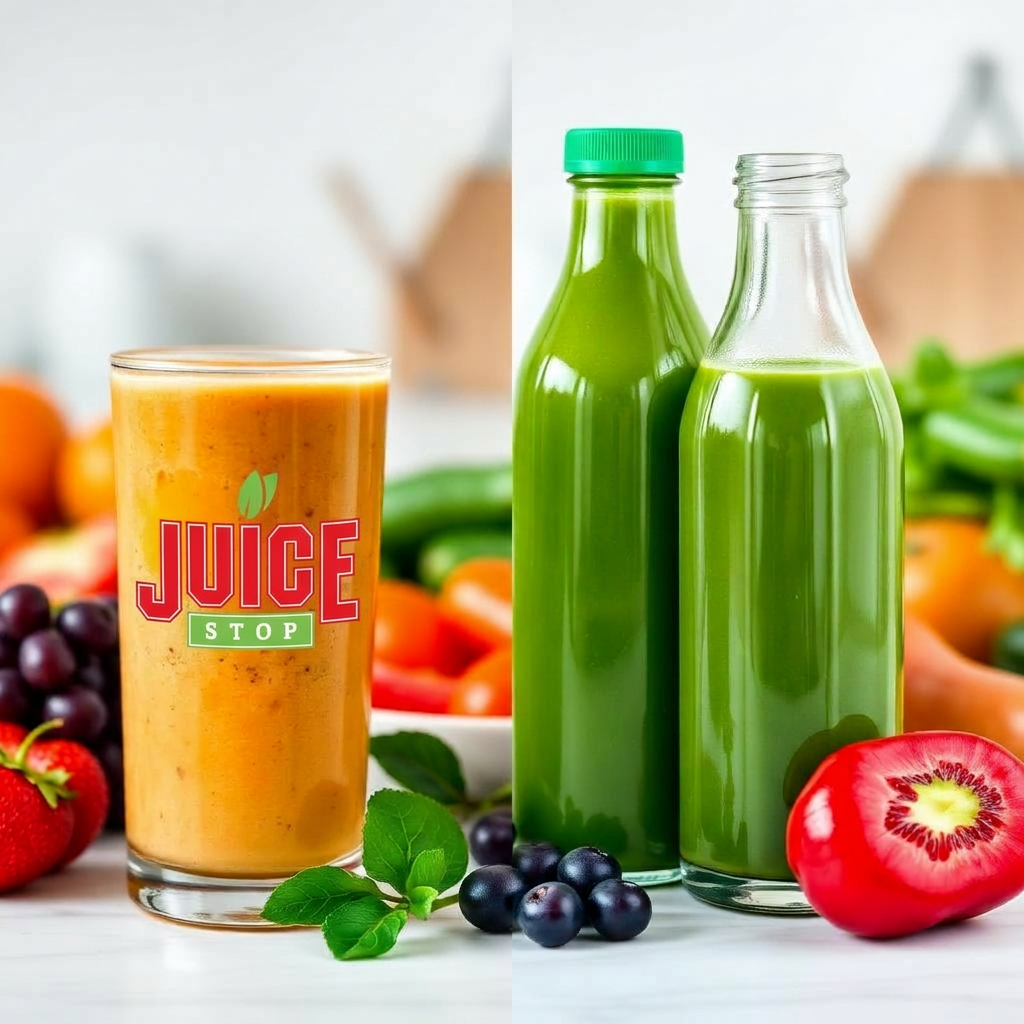
It's one of the most common questions we get at the counter: 'Is a smoothie better for me, or should I get a juice?' The honest answer is that they're different tools for different jobs. A juice is not a healthier smoothie. A smoothie is not a thicker juice. They behave differently in your body, fit different goals, and shine in different moments.
After two decades of pouring both, here's the framework we use to help people pick.
What's Actually in a Juice
Cold-pressed and traditional juices are made by extracting the liquid from fruits and vegetables and discarding the pulp. What's left is a concentrated stream of sugars, water-soluble vitamins, minerals, and plant compounds (phytonutrients). What's removed is most of the fiber.
That fiber removal is the most important thing to understand. Fiber is what slows down the absorption of natural sugar in fruit. Eat an apple and your body trickles in the fructose over an hour. Drink the juice of three apples and that same sugar load arrives in your bloodstream in minutes. Your blood glucose rises faster. Your insulin response is sharper. The 'hit' is bigger.
This is not inherently bad. It's just important. A juice is a concentrated dose of plant nutrients and natural sugar. Used at the right time, it's a great tool.
What's Actually in a Smoothie
A smoothie keeps the whole fruit. The fiber, the pulp, the cell walls — all blended into a drinkable form, but still present. That fiber slows down sugar absorption, keeps you full longer, and feeds the good bacteria in your gut.
A real-fruit smoothie is closer to a meal than a beverage. A 24oz smoothie with banana, berries, juice, and protein can easily land at 350 to 500 calories and 30-plus grams of protein. That keeps you satisfied for hours. A 16oz juice is usually 150 to 250 calories and will leave you hungry in 45 minutes.
When a Juice Makes Sense
A few real use cases where juice is the right call:
You want a concentrated micronutrient hit. A 12oz cold-pressed green juice can contain the nutrients from several handfuls of greens, half a cucumber, an apple, a lemon, and a knob of ginger. Most people don't eat that volume of vegetables in a day. Juice is an efficient delivery system.
You're feeling under the weather. A wheatgrass shot or a ginger-citrus juice can be easier to get down when your appetite is gone. Fluids plus nutrients in a small, drinkable form.
You want hydration with flavor. A watermelon or cucumber juice on a hot day is just better than water.
You're pairing it with a meal. A small juice on the side of breakfast doesn't have to fill you up — it just adds nutrients.
When a Smoothie Makes Sense
Smoothies are the better tool for most of the everyday situations we see:
Replacing a meal. Breakfast on a busy morning, lunch on the road between job sites, dinner after a late practice. The protein, fat, and fiber in a smoothie keep you actually fed.
Post-workout recovery. We covered this in our protein smoothie guide — the carb-plus-protein combo in a real-fruit smoothie is hard to beat.
Getting kids to eat fruit and vegetables. Green Machine in a sippy cup is the only legal way most parents get their kid to consume spinach.
Blood sugar control. The fiber in a smoothie keeps glucose absorption steady. If you're managing your blood sugar, a smoothie with protein and lower-sugar fruits (berries, greens, avocado) will treat you better than a juice.
Satiety on a calorie budget. A 200-calorie smoothie with protein keeps you full longer than a 200-calorie juice. If you're eating in a controlled way, smoothies usually win.
The Sugar Conversation, Honestly
Both juices and smoothies are higher in natural sugar than a plate of vegetables. That's just true. The questions are: how much, how fast does it hit, and what else is in the cup.
An 8oz fresh-pressed orange juice has roughly 22g of sugar — about the same as a soda. The difference is that the juice also delivers vitamin C, folate, potassium, and antioxidants. Soda delivers nothing. So orange juice is meaningfully better than soda, but it's still a real sugar load, and pretending otherwise doesn't help anyone.
A smoothie's sugar content depends entirely on what's in it. A berry-and-greens smoothie with protein and almond milk might be 15g of total sugar. A frozen-yogurt-and-sherbet-based smoothie from a less honest shop can be 70g. This is why ingredients matter so much. Ask. Read the menu. Look for real fruit.
Cold-Pressed vs Centrifugal Juice
Within the juice world, there are two main extraction methods. Centrifugal juicers spin produce at high speed against a mesh, generating heat and aerating the juice. Cold-pressed juicers crush and squeeze, producing less heat and less oxidation. Cold-pressed juice typically retains more nutrients and has a longer shelf life.
If juice is your thing, cold-pressed is the better product. It's also more expensive because it takes more produce to make the same volume.
What We Pour at Juice Stop
We're a smoothie shop first, with a juice and shot menu that fills in the gaps. Real-fruit smoothies are what we do best — they're what our founders built the brand around. But if you want a wheatgrass shot, a ginger immunity boost, or a green juice, we've got you.
Our recommendation for someone new: start with a smoothie for the meal-replacement and recovery side of your routine, and add a small juice or shot when you specifically want the concentrated nutrient hit. That combination covers almost every wellness goal we hear at the counter.
The Bottom Line
Neither juice nor smoothie is universally 'better.' Juice is a concentrated nutrient delivery system without fiber. Smoothies are blended whole-fruit meals with fiber, protein potential, and lasting fullness. Use juice when you need a fast micronutrient lift. Use smoothies when you need a real meal or post-workout recovery. Skip both if they're hiding 60g of added sugar behind a wellness label.
The healthiest beverage choice is usually the one made from ingredients you'd recognize if you saw them in a grocery store. Real fruit. Real vegetables. Nothing pretending to be either. That's the test.