What Is a Boba Blender? A Guide to Bubble Tea Smoothies
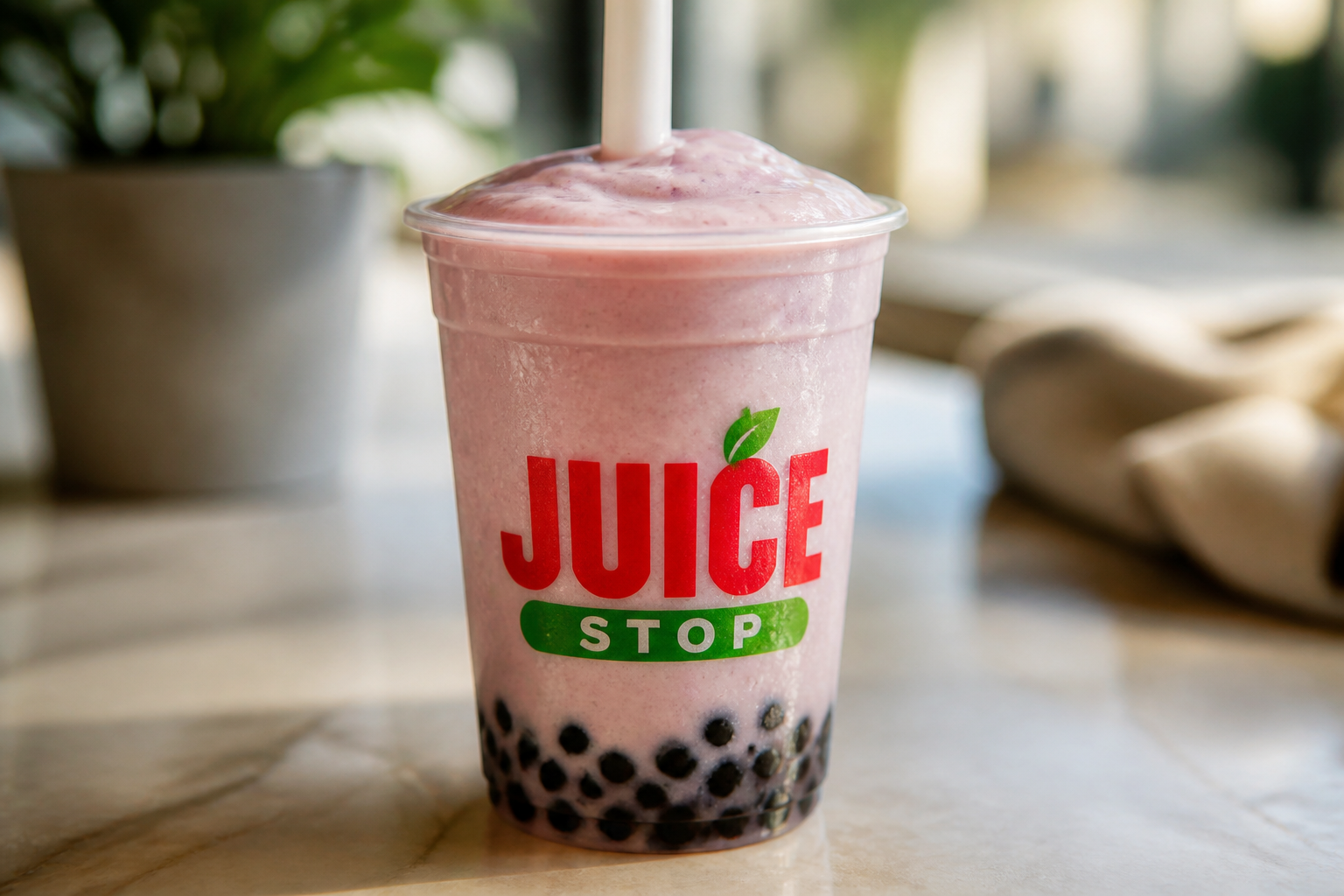
You’ve seen it around Sioux Falls. In the hands of friends, on your social media feed, maybe even glimpsed on a secret menu. It’s a colorful, creamy drink in a sealed cup with a distinctively wide straw and a layer of mysterious, dark spheres at the bottom. This delightful concoction is the boba blender, and it represents a perfect marriage between two beloved beverages: the classic real-fruit smoothie and the trendy Taiwanese bubble tea. It’s part drink, part snack, and entirely fun.
But what exactly is it? How is it different from the bubble tea you might already know? The appeal lies in its texture, its flavor, and its novelty—the delightful experience of sipping a thick, refreshing smoothie and getting a chewy, sweet surprise with every gulp. It’s a drink that engages more than just your taste buds. If you’ve ever been curious about this fantastic fusion, you’re in the right place. We’re about to dive deep into the world of boba blenders, exploring everything from the tea to the pearls to the technique that makes it all work.
From Tea Houses to Smoothie Shops: The Rise of Boba
Before we can understand the boba blender, we have to travel back in time and across the globe to the birthplace of its inspiration: bubble tea. The story of boba begins in Taiwan in the 1980s, a time of economic prosperity and cultural innovation. As with many great inventions, its exact origin is a topic of friendly debate, with two tea houses, Chun Shui Tang in Taichung and Hanlin Tea Room in Tainan, laying claim to its creation.
The Chun Shui Tang story credits its product development manager, Ms. Lin Hsiu Hui, who, during a boring staff meeting in 1988, whimsically poured her sweetened tapioca dessert, called 'fen yuan,' into her Assam iced tea. The combination was an instant hit among the staff and was quickly added to the menu, where it became the shop's top-selling item. The Hanlin Tea Room version claims its founder, Tu Tsong-he, created the first boba tea in 1986 after seeing white tapioca balls at a local market and deciding to add them to tea, creating what he called 'pearl tea.'
Regardless of who conceived it first, the concept exploded in popularity across East and Southeast Asia. The name itself has a few layers. 'Bubble tea' can refer to the frothy bubbles created at the top when the tea is vigorously shaken with ice, a signature preparation method. 'Boba' (波霸), on the other hand, is a Chinese slang term that came to refer to the large, chewy tapioca pearls that became the standard. Today, the terms 'boba' and 'bubble tea' are used almost interchangeably to describe the entire category of drinks.
From its Taiwanese roots, boba culture spread like wildfire. It hopped across continents, landing in Asian-American communities in California and New York before becoming a mainstream phenomenon. Each new region added its own unique spin, moving beyond the original shaken milk tea. Shops started offering fruit-infused teas, slushies, and an ever-expanding menu of creative toppings. The drink became a symbol of social connection—a treat to grab with friends after school or on a casual weekend outing. Its arrival and subsequent boom in cities like Sioux Falls is a testament to its universal appeal. This constant evolution is what paved the way for the ultimate hybrid: the boba blender.
Deconstructing the Drink: What Is a Boba Blender?
So, how does a boba blender differ from the traditional bubble tea that started it all? While they share a key ingredient—the tapioca pearls—their preparation, texture, and very essence are distinct. Understanding these differences is key to appreciating what makes the blender so special.
A traditional bubble tea is typically made by shaking a tea base (like black or green tea), milk or creamer, sweetener, and ice in a cocktail shaker. This process chills the drink, mixes the ingredients thoroughly, and creates the signature foamy 'bubble' layer on top. The result is a cold, liquid beverage that you sip, with the pearls waiting at the bottom to be slurped up the straw. It's refreshing, light, and tea-forward.
A boba blender, true to its name, puts a high-powered blender at the heart of its creation. Instead of a shaken liquid tea, the base is a thick, creamy smoothie. This fundamental difference changes the entire experience. The consistency is rich and dense, more like a milkshake or one of the classic fruit smoothies you’d find at Juice Stop. It’s a spoonable, decadent treat that you drink through an extra-wide straw. It’s not just tea with pearls; it’s a fully integrated smoothie experience with a chewy, delightful surprise.
The Anatomy of a Perfect Blender
To truly appreciate the craft, let's break down a boba blender into its core components. Each element plays a crucial role in the final flavor and texture profile.
**The Base:** This is the heart and soul of the blender. While traditional boba is built on tea, a boba blender’s foundation is a smoothie. This can take many forms. It might be a classic fruit smoothie, blending real fruits like mango, strawberry, and banana with a liquid like juice or almond milk. It could also be a creamier, richer base using ingredients like yogurt, ice cream, or dedicated flavor powders like taro or coconut. The quality of this base is paramount. A base made with real, whole ingredients will always deliver superior flavor and better nutrition compared to one made from artificial syrups and powders.
**The Tea:** Does a boba blender even have tea? Often, yes! To maintain a connection to its bubble tea roots and add a layer of complexity, many boba blenders incorporate a concentrated shot of strongly brewed tea. A rich, malty black tea can add depth to a creamy taro blender, while a fragrant jasmine green tea can brighten up a fruit-based one. This tea element is what separates a true boba blender from simply being a smoothie with pearls plopped in. It provides a subtle-but-essential flavor backbone.
**The Pearls:** We can't talk about boba without dedicating a whole section to the star of the show! The pearls (or boba) are the chewy, sweet, and fun component that makes the drink so unique. They are traditionally made from tapioca starch and provide a wonderful textural contrast to the smooth, creamy base. Their quality, cook, and sweetness level can make or break the entire experience.
**The Sweetness:** Boba drinks are treats, and sweetness is a key part of their appeal. In a boba blender, this sweetness can come from multiple sources. The pearls themselves are almost always soaked in a sugar syrup (often brown sugar). The smoothie base might be sweetened with additional syrups, honey, or, in healthier versions, the natural sweetness of the fruit itself. Many specialty shops offer a sliding scale of sweetness, allowing you to customize your drink from 0% to 100%, giving you control over your treat.
The Heart of Boba: All About Tapioca Pearls
Those iconic black spheres at the bottom of the cup are more than just a garnish; they are the heart of the boba experience. But what are they, exactly? Traditional boba pearls are made from tapioca, a starch extracted from the root of the cassava plant, a woody shrub native to South America and now cultivated across the tropics. The cassava root is a staple food for millions, but in its refined, starchy form, it becomes the building block for our favorite chewy treat.
The process begins by mixing tapioca starch with hot water and, often, brown sugar or caramel coloring, which gives the pearls their signature dark hue. This mixture forms a pliable dough. The dough is then rolled, cut, and shaped into small spheres. These raw pearls are dried for preservation and shipped to boba shops and smoothie bars around the world. But their journey isn't over yet; the most critical step happens right in the store.
Cooking Pearls to Perfection
The difference between amazing boba and mediocre boba almost always comes down to how the pearls are cooked. It’s a science and an art. The dried pearls are boiled in large pots of water for a significant amount of time, typically around 20-30 minutes. During this time, they absorb water, swell in size, and transform from hard little pellets into translucent, gelatinous orbs. After the initial boil, the heat is often turned off, and the pearls are left to steam in the hot water for another 20-30 minutes to ensure they are cooked through to the center.
The goal is to achieve the perfect texture, a quality lovingly referred to as 'Q' or 'QQ' in Taiwan. It’s a difficult quality to translate directly, but it means bouncy, springy, and satisfyingly chewy—similar to the concept of 'al dente' in Italian pasta. The pearl should offer a slight resistance when you bite into it, then yield to a soft, tender chew. Pearls that are too hard are undercooked, and pearls that are mushy and dissolve instantly are overcooked.
Once cooked and drained, the pearls are immediately transferred to a bath of sugar syrup, typically a rich brown sugar or longan honey concoction. This step does two things: it prevents the pearls from sticking together in a giant clump, and it infuses them with a deep, satisfying sweetness that complements the drink they’re added to. The best boba pearls are served warm, providing a delightful temperature contrast against the cold smoothie.
However, this perfection is fleeting. Freshly cooked tapioca pearls have a very short shelf life, peaking within about four to six hours. After that, the starch begins to retrograde, causing the pearls to harden and become unpleasantly tough. This is why dedicated boba shops cook fresh batches throughout the day. A shop that cares about quality will never serve you day-old boba.
Beyond the Black Pearl: A Rainbow of Toppings
While classic black tapioca pearls remain the most popular choice, the world of boba toppings is vast and exciting. If the traditional chewy texture isn't for you, there are plenty of other options to explore:
**Popping Boba:** These are not made from tapioca at all. They are small spheres created using a culinary process called spherification, where a liquid (like fruit juice) is mixed with sodium alginate and dropped into a calcium chloride bath. This forms a thin, edible gel membrane around the liquid center. When you bite into them, they burst or 'pop' with a gush of flavor. Common flavors include mango, strawberry, and lychee.
**Crystal Boba:** These are a more modern invention. They are translucent, have a less chewy and more gelatinous, crunchy texture, and are often made from konjac or agar. They typically come pre-made in a sweet syrup and don't need to be cooked, giving them a more consistent texture. They offer a lighter chew than traditional tapioca.
**Jellies:** Cut into small cubes or other shapes, jellies made from coconut meat (nata de coco), agar, or grass jelly offer another fun textural dimension. They absorb the flavor of the drink and provide a firm, jiggly contrast to the smoothie.
The Art of the Blend: Technique Matters
You might be thinking, 'Can't I just make a smoothie and stir in some cooked pearls?' While you could, the result wouldn't be the same as a professionally made boba blender. The technique is surprisingly nuanced, designed to create the perfect harmony of a thick, uniform smoothie and distinct, intact pearls at the bottom.
The first challenge is managing the ingredients. A high-powered commercial blender is essential. It needs enough force to pulverize ice, frozen fruit, and other ingredients into a perfectly smooth, vortex-like consistency without any chunks or icy bits. This is what creates that luxurious, creamy texture that defines a blender.
But here’s the trick: you absolutely do not blend the pearls. Doing so would shred them into a starchy, gummy mess, destroying the chewy texture that makes boba so beloved. The smoothie base is blended on its own to perfection. The magic happens during assembly.
The process looks something like this: A generous scoop of freshly prepared, warm tapioca pearls is placed at the bottom of the cup. Then, the thick, ice-cold smoothie is carefully poured or dispensed over the top. This method is brilliant for a few reasons. First, it keeps the pearls whole and chewy. Second, the temperature contrast between the warm, syrupy pearls and the frigid smoothie is a fantastic sensory experience. Finally, the sheer density of the smoothie helps to suspend the pearls slightly, preventing them from compacting into a solid layer at the very bottom, making them easier to slurp up.
The final piece of the puzzle is the iconic wide-gauge straw. It's not just a novelty; it's a functional necessity. A standard straw is far too narrow to accommodate the 1/2-inch tapioca pearls. The boba straw is specifically designed to be wide enough for you to get the perfect ratio of creamy smoothie and chewy pearl in every single sip. That satisfying 'pop' as you pierce the sealed film on the lid is the official start of your boba blender adventure.
Exploring Boba Blender Flavors
The flavor possibilities for boba blenders are virtually endless, ranging from traditional Asian dessert profiles to a full spectrum of fruit-fusion creations. This versatility is what makes the drink so exciting and accessible to every palate.
Classic Tea-Forward Blends
These flavors are inspired by the most popular traditional boba tea offerings, re-imagined in a thick, blended format. They are often creamy, rich, and distinctly dessert-like.
**Taro:** Instantly recognizable by its beautiful, natural light purple color, taro is a root vegetable with a flavor profile that’s surprisingly complex and delicious. It’s often described as nutty, slightly sweet, and reminiscent of vanilla or a buttery biscuit. In a blender, it creates an incredibly creamy, starchy, and satisfying drink that’s a fan-favorite worldwide.
**Matcha:** For green tea lovers, the matcha boba blender is a must-try. Made from finely ground, high-quality Japanese green tea leaves, matcha has a vibrant green color and a complex flavor that is earthy, slightly bitter, and subtly sweet. When blended with a creamy base, the bitterness is softened, resulting in a balanced, antioxidant-rich, and energizing treat.
**Thai Tea:** Another visually stunning option, the Thai tea blender features a base of strongly-brewed black tea that’s been infused with spices like star anise, cardamom, and tamarind. It’s sweetened with sugar and condensed milk, giving it a signature bright orange color and a flavor that is incredibly sweet, creamy, and aromatic.
The Fruit-Fusion Revolution
This is where the boba blender truly shines and finds a natural home in places that specialize in high-quality smoothies. By swapping out flavor powders for real, whole fruit, the boba blender transforms into a fresh, vibrant, and often more nourishing experience. At Juice Stop, we believe in the power of real fruit, and that philosophy extends to how we approach fun and delicious creations like these.
**Tropical Delights:** Fruits like mango, passion fruit, and pineapple are perfect for boba blenders. Their bright, tangy, and sweet profiles create a refreshing contrast to the rich, molasses-like flavor of the brown sugar-soaked tapioca pearls. A mango boba blender is like a sip of pure sunshine.
**Berry Blends:** Strawberry, raspberry, and blueberry create beautifully colored and deliciously tart blenders. A strawberry boba blender, for instance, often tastes like a strawberry milkshake but with a fun, chewy twist. The natural tartness of the berries helps to cut through the sweetness of the pearls, creating a wonderfully balanced drink.
**Creamy Combinations:** Fruits that are naturally creamy, like banana and avocado, are fantastic in boba blenders. A banana-based smoothie adds natural sweetness and a thick, rich texture that pairs perfectly with the chewiness of the boba. Combining it with strawberry or chocolate elevates it even further.
Is a Boba Blender a Healthy Choice? A Balanced Look
With all this talk of creamy bases and sugary pearls, it’s natural to wonder about the nutrition of a boba blender. Is it a healthy snack or an indulgent dessert? The honest answer is that it can be either, depending entirely on how it's made and how you choose to enjoy it.
Let’s be realistic: a traditional boba tea or a decadent, ice-cream-based boba blender is a treat. The tapioca pearls themselves are mostly carbohydrate and are soaked in sugar syrup, contributing a significant amount of sugar and calories. Many classic boba blender recipes also call for sweetened condensed milk, non-dairy creamers, or flavored syrups that further increase the sugar content. When viewed this way, a boba blender falls squarely into the dessert category, and there's nothing wrong with enjoying it as such on occasion.
However, the 'blender' format offers a unique opportunity to create a more balanced, nourishing version. When you opt for a boba blender made with a base of real, whole fruit, you're getting so much more than just sugar. You're getting the fiber, vitamins, and minerals naturally present in that fruit. A base of strawberries and bananas, for example, provides Vitamin C, potassium, and dietary fiber.
You can take control of your boba experience. Here are a few ways to make it a more mindful choice:
* **Choose a Fruit Base:** Opt for a blender built on real fruit instead of flavor powders and syrups. Your body will thank you for the added nutrients.
* **Ask About Sweetness:** If the shop offers it, ask to reduce the sweetness level. This typically cuts down on the amount of extra syrup added to the smoothie base.
* **Mind Your Portion:** Boba often comes in large sizes. Choosing a smaller cup is an easy way to enjoy the treat without overdoing it.
* **Think of It as a Treat:** The healthiest mindset is to view your boba blender as a fun and delicious treat. It's a perfect way to celebrate a small win, cool down on a hot Sioux Falls day, or just add a little joy to your afternoon.
Your First Boba Blender: A Beginner's Guide to Ordering
Walking into a boba shop for the first time can be happily overwhelming. With a massive menu of unfamiliar names, colors, and combinations, it's hard to know where to start. But ordering your first boba blender is easy once you break it down into a few simple steps.
**Step 1: Choose Your Base Flavor.** This is the most important decision. Are you in the mood for something fruity and refreshing, or something creamy and dessert-like? If you're unsure, you can't go wrong with a crowd-pleasing fruit flavor. Mango and strawberry are excellent entry points—their familiar, sweet taste is a perfect introduction. If you're feeling more adventurous, a classic taro or Thai tea blender will give you a more traditional boba experience.
**Step 2: Pick Your Topping.** For your first time, we highly recommend sticking with the classic: traditional tapioca pearls. This will give you the authentic texture and chew that defines the boba experience. Once you're familiar with that, you can start exploring other options like popping boba or jellies on a future visit.
**Step 3: Consider Customizations.** Many places will ask about your preferred sweetness and ice levels (though for a blender, the ice level is usually standard). If it's your first time, ordering the standard or 'regular' sweetness is a safe bet. You can always ask for less sugar on your next visit if you find it too sweet.
**Step 4: Don't Be Afraid to Ask!** The staff behind the counter are your best resource. They make these drinks all day long and know the flavors inside and out. Just tell them what you like—'I love strawberries,' or 'I want something creamy but not too sweet'—and they can almost certainly point you toward a drink you'll love. Part of the fun is discovery, and there are no wrong choices.
The Boba Blender Experience in Sioux Falls
Once a niche drink found only in major coastal cities, the boba wave has firmly arrived here in Sioux Falls, and the boba blender is one of its most exciting evolutions. It’s more than just a passing trend; it's a reflection of our growing appetite for new flavors, fun experiences, and globally inspired treats. It represents a delightful intersection of cultures, blending Taiwanese tea tradition with the American love for a great smoothie.
The experience of drinking a boba blender is multisensory. It starts with the visual appeal—the beautiful color of the smoothie layered over the dark pearls. Then comes the satisfying 'thwump-pop' of piercing the sealed lid with your straw. Finally, the best part: the unique sensation of sipping a thick, frosty smoothie and feeling the soft, chewy pearls travel up the straw—a playful and delicious combination that never gets old. It’s a drink that makes you smile.
Whether you need a refreshing cooldown during a hot South Dakota summer, a fun afternoon snack to break up the workday, or a unique treat to share with friends on the weekend, the boba blender fits the bill perfectly. It's a small cup of joy that's both a delicious beverage and a fun activity all in one.
The world of boba is rich and deep, but you don’t have to book a flight to explore it. The next time you're craving a smoothie but want to try something a little different, a little more fun, consider the boba blender. Stop by one of our Juice Stop locations here in Sioux Falls to see what delicious, fruit-forward combinations we’re blending up. We'd love to introduce you to your new favorite treat.